Understanding the Closures of UK Chemistry Degrees
I completed an MA in Academic Practice this year, and my dissertation was on the closure of Chemistry Departments. I’ve blogged a little on the economics of closures before, but the full argument develops this into a theoretical framing of Human Capital Theory and goes on to look at how professional bodies are constructing their arguments.
I can’t face trying to get this published in a journal, so I’m posting the thesis here (as text below, and as both .docx and .pdf too). I hope it’s of some use in the ongoing conversation, or to someone trying to figure out what on earth is happening when another fantastic Department is threatened.
Understanding the Closures of UK Chemistry Degrees
Abstract and Thesis Statement
Recent years have seen the closure of several Chemistry degrees in the UK. This thesis develops an explanation of the closures which sits inside the ongoing scholarly debate about the use of Human Capital Theory (HCT). It then explores the policy positions of three bodies advocating for their disciplines as a negotiation between the merits and critiques of this model.
Closures of Chemistry Departments can be explained through the marginal economics of teaching, but are ultimately a consequence of a policy agenda informed by Human Capital Theory. To connect with policy makers Chemistry must accept the broad framing of Human Capital Theory, but to argue for the discipline’s survival Chemistry must challenge that same theory. Developing persuasive expressions of market failure is therefore central to the survival of the discipline as a University subject.
Abbreviations
DfE Department for Education
HCT Human Capital Theory
HE Higher Education
HEFCE Higher Education Funding Council England
HEI Higher Education Institution
HEPI Higher Education Policy Institute
OfS Office for Students
PSRB Professional, Statutory, or Regulatory Body
RSC Royal Society of Chemistry
UK United Kingdom
WP Widening Participation
Argument Overview
This document starts by describing the specific financial mechanisms related to Departmental closures under a regime of fixed per-student funding, before situating this analysis in the context of participation in Higher Education under Human Capital Theory. It then analyses the policy briefings published by three professional bodies, developing the thesis: Chemistry needs to accept Human Capital Theory to make its case to policy makers, but needs to challenge the theory to survive (Figure 0).
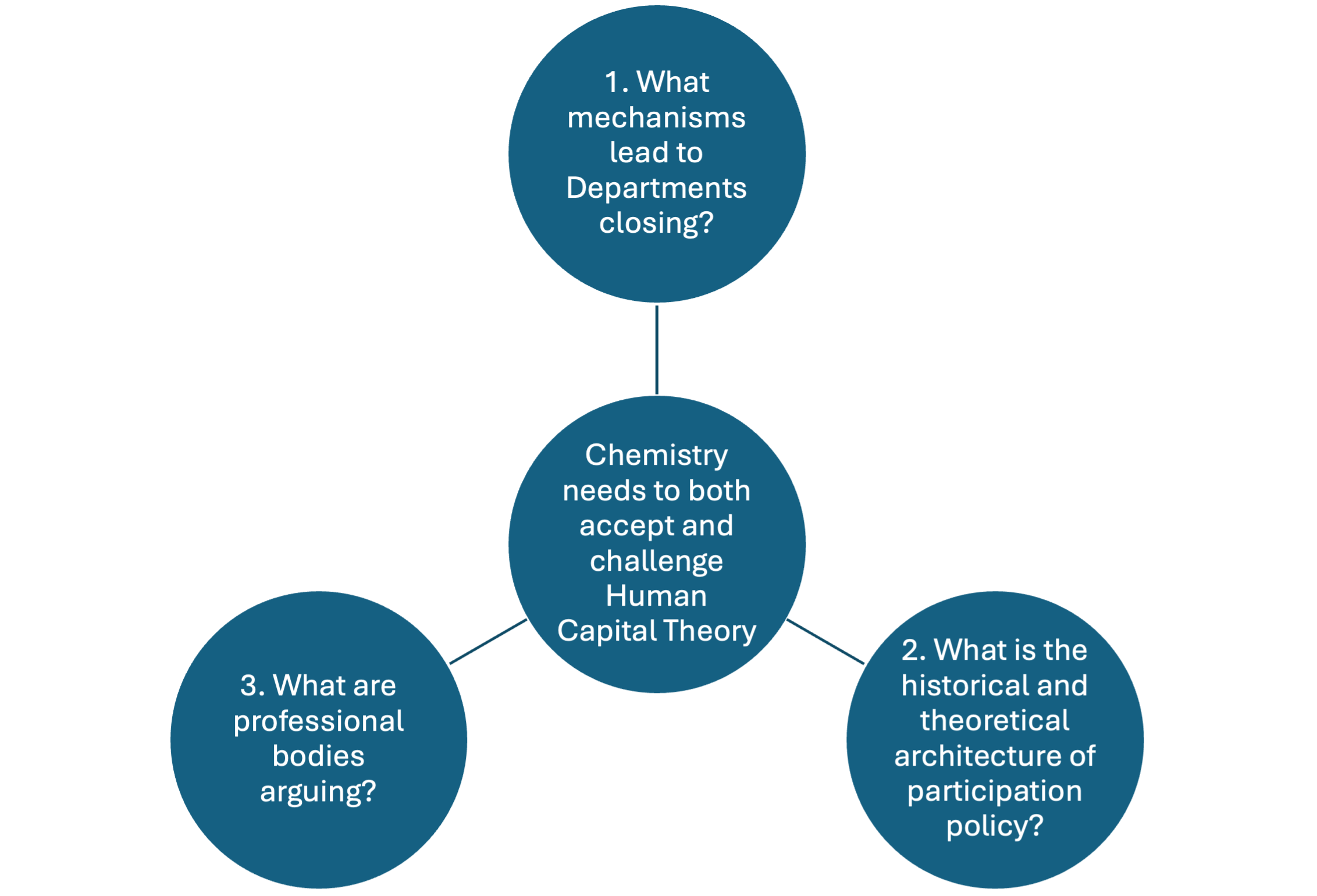
Figure 0: Schematic representation of this thesis’ structure
Thanks
I am grateful to the University of Liverpool for offering the MA in Academic Practice through the Academy; it has been a very positive part of my employment here.
I am personally grateful to Dr Eli Saetnan for supervising an unusual project and giving such thoughtful suggestions for improving it.
Wordcount
7,611
Excluding: Front Matter, Footnotes, Tables, and Captions
Positionality
This is not a disinterested study, but one with close links to my professional identity. My first academic post was at the University of Hull, where I was appointed as a Chemistry lecturer in 2016. The University recently closed this Department, which I found both sad and puzzling. Hull had a strong reputation for teaching Chemistry, so why was it stopping? The Department had strong links with the substantial chemical industries in the Humber estuary, so why was it no longer needed? Chemistry is central to national strategies in key sectors like energy and advanced manufacturing, so why was there no Government pressure on Universities to keep Chemistry Departments open?
These were points of genuine confusion for me, and I wanted to understand the situation better; this thesis embodies a personal ambition to satisfy my own curiosity.
Chemistry courses are closing in the UK
Closures are a phenomenon of marginal economics.
Over the last few years, several Universities have announced the closures of their Chemistry Departments.[1] Closures have happened before: in the 2000s, several Universities – most famously Exeter – closed their Departments due to the shrinking “unit of resource”, the amount of money available to teach each student.[2]
Economic Mechanisms
Chemistry has always been an expensive subject to teach. A 2019 government estimate suggested that the cost of educating a student for a year outstripped funding by £2,900 (Figure 1); adjusted for inflation to (February) 2026 values, this is around £3,800.[3] Whatever the finer details of these analyses, the central economic fact is that Universities lose a lot of money when they teach Chemistry.
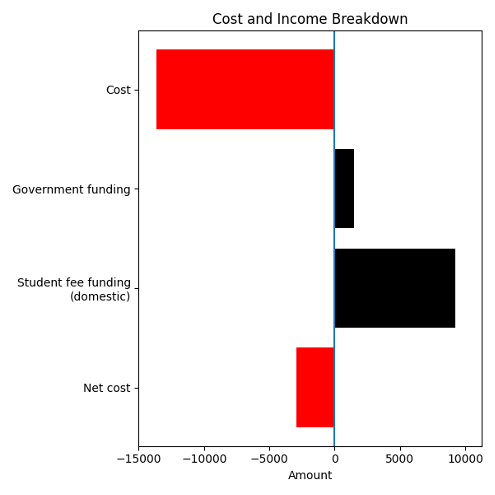
Figure 1: The government-estimated costs and actual student fee funding and government funding for teaching one student Chemistry for one year in England in 2019, showing a net cost of £2,900 per student per year.
The unusually-high cost of teaching Chemistry seems to relate to the fixed costs of education, rather than marginal costs. For example, the cost of building specialist lab space is a very high fixed cost, but the cost of increasing a cohort size by one student is a very low marginal cost. Studies on costs of provision in the USA suggest that another important element of fixed costs is the inflation of staff costs through promotion: because Chemistry as a discipline often aligns well with institutional promotion criteria, Chemistry instructors are often better-paid than in other subjects.[4] The relatively high contact hours of the subject are less significant than might be expected, as Chemistry teaching often relies more heavily on readily-scalable pedagogies like lectures.
Transposing these arguments into an English context, we can frame the financial deficits as the marginal income of instruction failing to meet the marginal cost of instruction (Figure 2). The point at which student numbers “dilute” the marginal costs enough to break even with income has always been hard to reach in the context of the numbers constraints imposed by a disciplinary commitment to lab-based pedagogies,[5] but as the tuition fee has been fixed during a period of high inflation the gap between costs and income has widened in recent years.
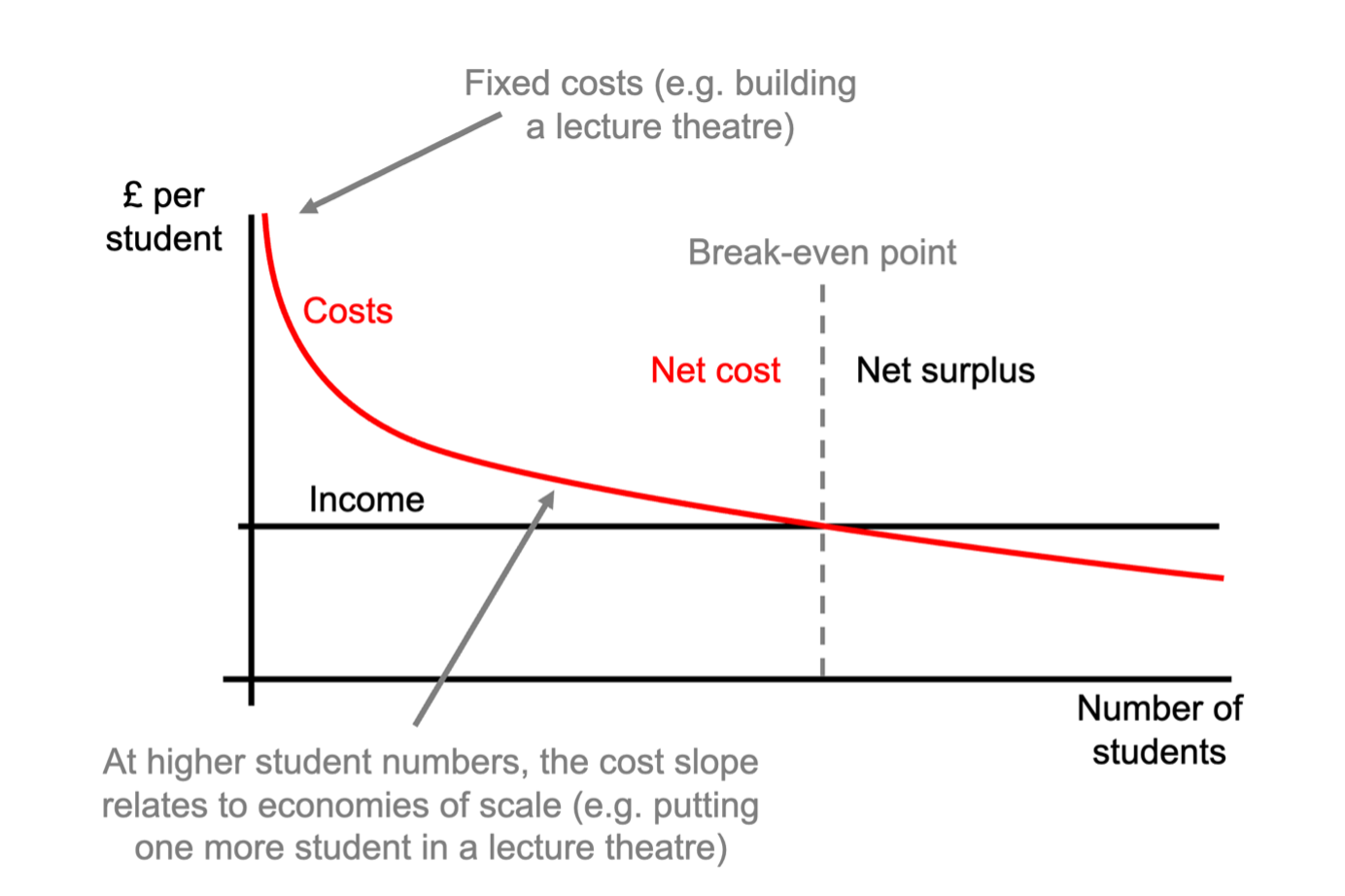
Figure 2: schematic representation of the marginal cost and income of instruction in an English Chemistry degree. Chemistry Departments generally do not break even, principally due to high fixed costs.
This situation is not new. Deficits in high-cost subjects have always been sustained through cross-subsidies from the overall finances of a University. For example, teaching less resource-intensive subjects like Maths or teaching high-fee international students can produce an operational surplus for a University which it “spends” on teaching Chemistry. The proximate cause of current closures is the loss of these internal subsidy mechanisms, rather than the growing cost of delivering a Chemistry degree. Inflationary erosion of domestic tuition fee income and contraction of the international market mean that Universities aggregate smaller surpluses (or larger deficits) across their overall teaching portfolio. Looking for ways to protect a sustainable trajectory, internal decisions are made to reduce spending. One way to do this is to close a Department, and in that context it is reasonable to consider closing a loss-making Department.
Sub-Conclusion
While the economics of teaching the subject have never generated a surplus, Chemistry degrees are closing in the UK because University finances are being damaged by the failure of the tuition fee to hold its value against inflation. The general finances of Universities under this income regime are driven by student numbers, and encourage the closure of loss-making Departments.
Policies of student numbers
The policy lever of student numbers has a history within the economics of Universities, and this context is important to set out before reaching for a theoretical account of the policy architecture.
Below, I present a stylised account of three important moments in student number policy, aiming to show how they can be considered as a Widening Participation (WP) agenda. Student numbers grow by including people who had been excluded. By sketching out a few moments in this history we can begin to see the economic and social agendas which persist in all these discussions, and I aim to show how economic and social arguments inter-relate in complicated ways.
19th Century Civics
In the early 19th century, the rapid industrial growth of Britain led to a demand for skilled labour.[6] The number of students able to study at Universities was increased through franchising the power to award degrees: students would be taught in, say, Liverpool and then sit an exam set by the University of London. By 1825 the UK’s student population had grown to 11,000.[7] Towards 1900 the legal and institutional instruments for founding new Universities had been established, and former franchises rapidly became Universities in their own right. Most of these were non-residential Universities, in part because this allowed students to practice their religions freely. At the same time, most of the growth in University student numbers was due to an increased proportion of Public School pupils entering Higher Education rather than a boom in Catholic and Nonconformist student numbers.
The economic and social stories align. An economic demand for skilled labour was met by educating more graduates. Educating more people had the social effect of allowing new constituencies the chance to access University. It is not the case that Catholics were a majority of these new students, but a by-product of national economic ambition was that a Catholic could readily enter formal study in 1900 in ways which were impossible in 1850.
The Robbins Review
Immediately post-war, education policy focused on secondary schools. The 1944 Butler Act had made education free and compulsory up to the age of 15, instituting the tripartite system of technical, secondary modern, and grammar schools which streamed students on the basis of the “11-plus” exam.[8] In this context, the 1963 Robbins Review examined the whole UK University system, driven by an explicitly economic rationale:[9]
“the growing realisation of this country's economic dependence upon the education of its population has led to much questioning of the adequacy of present arrangements. Unless higher education is speedily reformed, it is argued, there is little hope of this densely populated island maintaining an adequate position in the fiercely competitive world of the future.”
Robbins looked for explanations of low participation in ways which related to social class, family background, and prior education (rather than a limited pool of talent). Its central recommendation has become the North Star of much subsequent discussion: “courses of higher education should be available for all those who are qualified by ability and attainment to pursue them and who wish to do so”. It is probably fair to say that the elegance of this expression has had more impact in the long term than the short term; a thoughtful HEPI retrospective recently explored some of the ways that Robbins has succeeded and failed in the last 60 years.[10]
Economic and social stories once again align. The state interest in education is largely economic, providing training which drives national competitiveness in the post-war world. At the same time, Robbins takes great care to foreground the social context of citizens and argues for a more inclusive academy.
Robbins’ emphasis on social arguments has attracted decades of criticism for focusing too narrowly on social class, and Williams describes how this can be seen as coming at the expense of gender, ethnicity, and disability. [11] Kettley explains how these critiques – often emerging from methodologies associated with feminist and neo-marxist philosophies used from the mid-1970s onwards – operate on a smaller scale than national policy (e.g. at the scale of a single human’s experiences).
The Dearing Reviews
These mounting theoretical critiques of Robbins became important vehicles for advancing expressions of social justice in the WP discourse. Student life trajectory became increasingly described as an important goal of access, rather than a by-product of the national economic agenda.[12] Into this context, the Dearing Reports of 1997 advanced a strong social justice message. Hoskins and Ilie show how Dearing prompted the government to express this by establishing the AimHigher project and the Office for Fair Access in the following years, institutionalising some of these ambitions.[13]
At the same time, Dearing made radical economic arguments. Chief among them was the introduction of student fees.[14] Barr and Crawford describe how Dearing’s tuition fees were a solution to the problem of University funding in the early 1990s, but also a solution to students’ living costs.[15] The proposed tuition fee of £1,000/year addressed the University funding crisis, and new maintenance funding targeted at the poorest students was a central part of the package of measures put forward in 1997.
In my stylised history, this development is the last significant change before the current closure of Chemistry departments; while the level of fee has risen and the specific policy formulation of WP have changed, Dearing’s tuition fee and access requirements are the critical blueprint for later policy such as raising the tuition fee to £3,000/year in 2004 and Browne’s 2010 proposal to remove the cap on tuition fee levels which resulted in the £9,000/year compromise characterising most of the period since.[16]
The rationale for fees is that students should contribute to an education which will boost their personal earnings. This argument shifts the economic conversation away from the national productivity questions seen in 19th-century arguments and the post-war Robbins report, and towards a conversation about individual productivity. One reading of Dearing’s contribution is that tuition fees are now being used to subsidise national policy: government reduces its exposure to funding Universities and also taxes graduates on their education-enhanced earnings. This expansion – much like the 19th century vignette – has the effect of widening access to Universities in socially progressive ways.
The social and economic arguments are again yoked together, but in new ways. Some of this novelty is a response to the new context. Barr and Crawford open their discussion by emphasising that the elite system Robbins investigated – with around 5% of school leavers entering University – is an order of magnitude smaller than the 50% ambition expressed after Dearing. Relatively generous government funding for 5% of the population in 1960 is plausible, but for 50% of the population in 2000 it is not. Individualising the cost of tuition was constructed in a way which advanced both the economic and social ambitions of policy makers.
Does the conversation between economic and social policy continue?
In these vignettes, both economic concerns for national productivity and social concerns for individual participation are increasingly expressed as individualistic issues relating to a single student. This expression of the student as a consumer can eclipse even their growth through the act of consuming. Ashwin argues that academic disciplines are increasingly sidelined in this productivity-access discourse, showing that from Dearing to Browne to the 2019 Augar Review the framing of subjects becomes increasingly instrumentalist: subjects are ways of getting degrees, rather than degrees being ways of exploring subjects.[17]
Perhaps the only common theme in the vignettes is that “widening” participation involves increasing participation. It is worth asking whether this is still true. The entry rate of 18-year-olds into HE peaked in 2021 at 38.2%.[18] Yet HESA Table 45 describes the number of “first degree” students studying Chemistry as decreasing over recent years (Figure 3).[19] The scale of decline is larger than the scale of closures over that time, despite happening during a growth in the number of births eighteen years prior of 6% (40,000 more babies).[20] An increasingly-small proportion of the population is studying Chemistry.
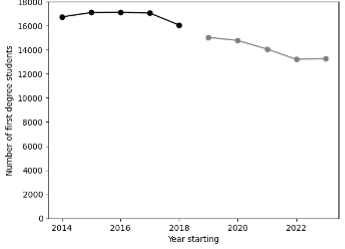
Figure 3: “First degree” students in Chemistry (including students beyond first year). Note that the technical definitions relating to identifying Chemistry students slightly changed in 2019-20.
This situation marks a substantial divergence from the historical trajectory of WP because student numbers have never gone down before. The historical vignettes all described situations where a policy ambition to increase student numbers was satisfied by removing some long-standing barrier to study. Policy interventions increased the supply of places at every stage, and the unmet demand of would-be students equilibrated the market upwards. Wat happens when student numbers fall? Muradas-Taylor demonstrates that shrinking student numbers have substantial consequences for the agenda of widening access. Her account of closures in Languages shows that closures disproportionately affect institutions with lower entry tariffs.[21]
The capacity to teach more Chemistry students likely exists if the sector taught over 2,000 more students a few years ago. It therefore seems probable that demand for the subject is falling, like in Languages. Widening access by increasing the number of places – a supply-side intervention – would not solve the problem of applicants avoiding Chemistry.
Sub-Conclusion
A stylised policy narrative shows growing numbers have historically been a conversation between social and economic policy involving a growth in student numbers. At the same time, recent trends show an unprecedented shrinking of student numbers in Chemistry.
Selecting a Theoretical Framework
The constellation of facts around closures outlined above is closely tied to the economics of teaching. Departments are closing because the per-student costs of instruction push Universities into financial decisions around reducing expenditure. Chemistry student numbers are falling in a post-Dearing HE market, with the supply of degree places outstripping demand for them. What theories are capable of advancing a scholarly account of departmental closures in this context?
Within economic theory, there is one extremely clear candidate: Human Capital Theory (HCT). It gives a coherent account of contextualised student choice, but it has also been the main basis for the actions of policy makers for over 50 years. There is no other theory which has a comparably influential position in this context.
Below I present the key features of HCT, and then complicate this by presenting some relevant criticisms from the literature. In presenting the criticisms, I will touch on some of the theories which can be used to frame education economics differently. Aware that my community is trained in Chemistry rather than Economics, I have tried to compress my reading of the literature into just one statement: HCT holds that training a workforce boosts the amount of extra work one extra person can accomplish.
Human Capital Theory (HCT)
As a modelling basis, the Human Capital Theory (HCT) project reduces human interactions to mathematically-tractable questions of supply and demand. HCT’s distinctive assertion lies in asserting that spending money on training people can realise economic returns in much the same way that spending money on equipment can. Just as an office worker with a computer is more productive than a worker without a computer, a worker with a degree is more productive than a worker without a degree. The extra work which can be done by employing one extra person – the “marginal productivity” – is bigger if that person is highly skilled, just as it is bigger if that person is provided with appropriate equipment.
The price mechanism rewards the higher marginal productivity of skilled labourers because skilled workers are paid more (for better or faster work). “Human Capital” is the embodied productivity a highly-skilled worker possesses. I have crudely depicted HCT’s account of HE in Figure 4.

Figure 4: a crude account of the logic of Human Capital Theory (HCT). Training someone in higher-order cognitive skills makes them more productive, boosting their earnings.
Rational individuals weigh up whether studying is “worth it” using salary data. States then tax higher-earning workers. Judging the merits of an education by using the metric of a graduate “salary premium” to evaluate the quality of educational provision is an approach emerging directly from HCT; in the UK this data is collected as the Longitudinal Educational Outcomes (LEO) dataset.[22] The 2025 release contains clear data on graduate earning by subject five years after graduation (Table 1).[23]
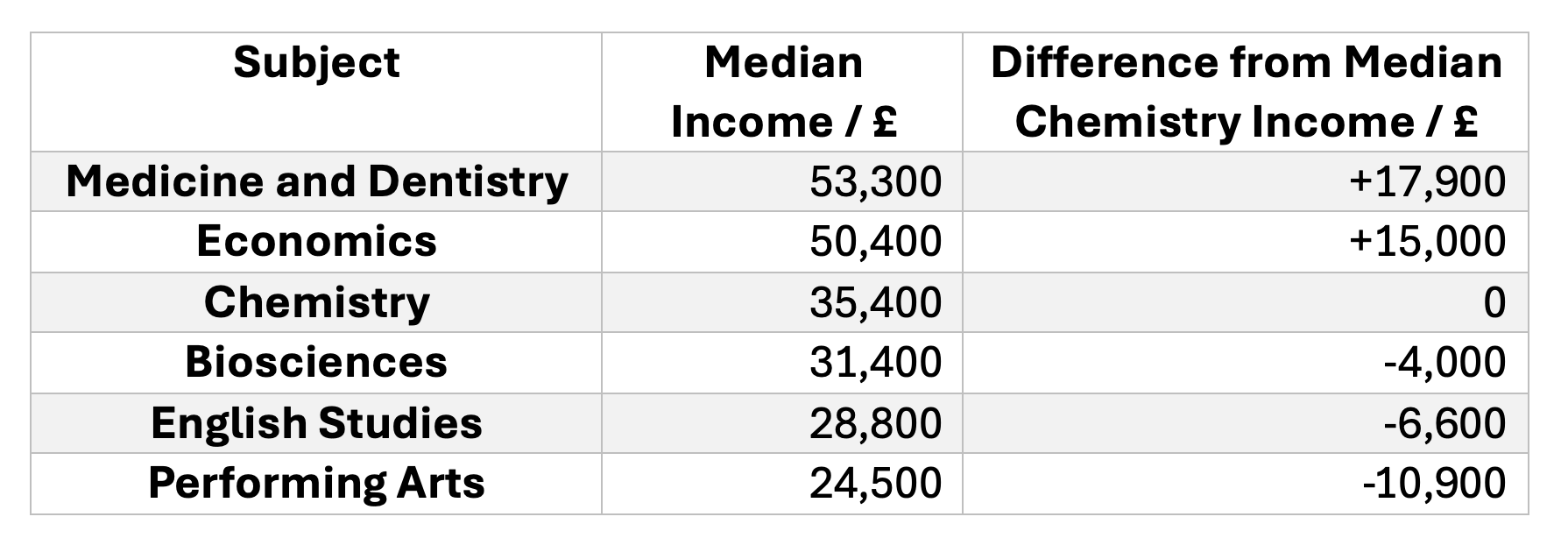
Table 1: Selected median earnings five years after graduating by subject in the 2025 Longitudinal Educational Outcomes (LEO) data release.
HCT has several important merits as a theoretical account of observable data. Grugulis describes how education is generally advantageous in the labour market and how higher qualifications are associated with higher pay, lower unemployment rates, and shorter periods of unemployment. HCT explains these observations well: educated, productive workers fare better in the job market.
The provision of international policy data on education by the World Bank has driven international aid funds to be distributed on the basis of this theory, something which Edeji explores in the context of the Human Rights agenda of guaranteeing children education.[24] This Human Rights case study points to HCT’s greatest general strength: it connects readily to practical action from policy makers, and this practical action can deliver tremendous social good. But it also signals the important shift away from HCT as a theory with merely-explanatory power for rationalising marginal productivity data. HCT is probably better viewed in the UK HE context as a theory of change: it provides a coherent suite of actions for policy makers to improve marginal productivity. If policy makers want to boost wages (and tax revenue), HCT gives them a clear instruction: give your population skills.
Summary of HCT
HCT holds that education makes people more productive, and that more-productive people earn more. For the purposes of this thesis, HCT aligns national support for HE with policies of national economic growth. In the discussion below I use the simplified image of “pulling the skills lever” to emphasise the mechanical, deterministic prediction of HCT as a policy tool.
Critiques of HCT
Historicising the emergence of HCT is one way of mapping some of its conceptual blind spots. Grugulis traces the history of HCT to work from the Chicago School in the 1960s, an economic philosophy emphasising the free market and problematising government intervention.[25] Marginson frames the moment of HCT’s historical genesis in the labour market of post-war America.[26] On his account, this was a period of massive growth in the number of professional jobs; amidst excess demand for skilled labour, being highly educated gave someone significantly better employment prospects.
Realism
Marginson remarks that “since its inception human capital theory has been subject to repeated and often devastating critiques.” These critiques focus mostly on the economic modelling, though, and do not seem to challenge the popularity of HCT as a basis for policy decisions. Marginson therefore develops two core strands of critique from the literature around its methodological realism. His choice for this agenda is interesting: he argues that the reason for HCT’s use as a policy rationale is because of the story it presents. The theory hasn’t been successful because it has explained marginal productivity data, but rather because it presents a coherent model of action: pull the skills lever to get higher wages. Criticising the realism weakens its basis as a reason for acting. Is it reasonable to think that skills boost productivity?
The first criticism is that the complexity and changeability of human society are not recognised in HCT’s modelling. This leads to important failures around phenomena like social class, which matters greatly in an employment context. There are contexts in which social status or personal characteristics such as conscientiousness – rather than technical skills – are a better explanation of high wages. In such cases, pulling the skills lever is unlikely to boost wages (because wages are tied to non-skills).
Secondly, the positioning of education and employment in a homogeneous field does not reflect modern reality where educated workers are not in such short supply. In a regime of high levels of education in the workforce, an individual’s employment advantage in having higher-order cognitive skills is diminished, making HCT a poorer tool for explaining marginal productivity. For example, if an industry has enough skilled workers then hiring extra skilled workers will not improve productivity. Pulling the skills lever is unlikely to result in higher wages if there are no jobs for productive workers.
Some adaptations of HCT can absorb some of these difficulties. For example: instead of signalling cognitive development as described by HCT, education instead signals a competitive position under Screening Theory. This broader view explains cases where cognitive development is the site of competition (like HCT does), but also cases where it some other factor such as social privilege or personal attributes determine competitive advantage (which HCT does not). Screening Theory describes having a degree as a positional good: the credential’s value lies in the way that it is not held by everyone. HCT claims that a degree is associated with someone having demonstrated certain things in a more absolute way: the value of a Chemistry degree might be that it shows a graduate is productive at lab work, for example, rather than its arbitrary scarcity as a qualification. Perhaps this distinction could be posed as a question: does a degree create productive workers (HCT), or does it merely identify which workers are (already) productive (Screening Theory)? Realistic social injustices like gender pay gaps pose a substantial methodological problem for HCT’s assertion that wages directly reflect only marginal productivity.[27] Either way, what these objections to is a more complex account of the link between education and productivity. It is not always realistic to think that pulling the skills lever works because of skills. Wolf’s account of student behaviours in a Screening Theory narrative is striking in this light: as participation in HE rises, not having a degree risks becoming a signal of low individual productivity.[28]
A final realism critique has grown in prominence since Marginson’s 2019 analysis: skills mismatch. McGuinness et al map out some of the ways that graduate skills are not matched to labour outcomes.[29] Graduates often work in non-graduate occupations (“vertical” mismatch) or in fields unrelated to their field of study (“horizontal” mismatch). Vecchia et al develop this analysis in a UK context, quantifying some of the ways this a realistic account of the modern economy: 30% of graduates work in non-graduate jobs, and 33% of gradates work in fields substantially unrelated to their studies.[30] While vertical mismatch was associated with significantly lower income, horizontal mismatch involved only a small income penalty. Mismatch arguments challenge the close link between skills and productivity set out by HCT. If the salary penalty for moving field is low, then pulling the skills lever does something more ambiguous than simply increasing productivity.
Realism Critiques: summary
Realism is used as an agenda to disrupt the internal logic of HCT, and does not challenge the purpose of education being national productivity. Instead, it can be used to challenge the link between education and productivity.
Market Failure
Within the logic of HCT, the decision to close Chemistry courses could be seen as a success of market forces. Students decide not to study Chemistry, and Universities respond to the economics of subject decline by taking the appropriate action and closing that course. Formal microeconomics has a long tradition of critical thought in this space in the family of argument named “market failure”. Realism challenges how well HCT describes economic phenomena, but market failure takes the mechanics of HCT as given and evaluates how well it functions on its own terms.
Broadly, market failure arguments describe cases where the actions of rational actors lead to inefficient (or socially undesirable) outcomes. The fundamental logic of market failure criticisms is that if a theory leads to bad outcomes then that theory should be abandoned or modified. This always demands a value judgement (“it is bad that this outcome is incentivised”), even if the judgement is implicit.
Spillover Effects
Auerbach and Green formulate the individualistic HCT conception of education in interesting ways. The wide availability of knowledge among graduates, for example, generates “spillover” effects as they assimilate and share this knowledge which are not captured in graduate salary data. Table 2 summarises some of the benefits which they argue are minimised in typical HCT arguments.
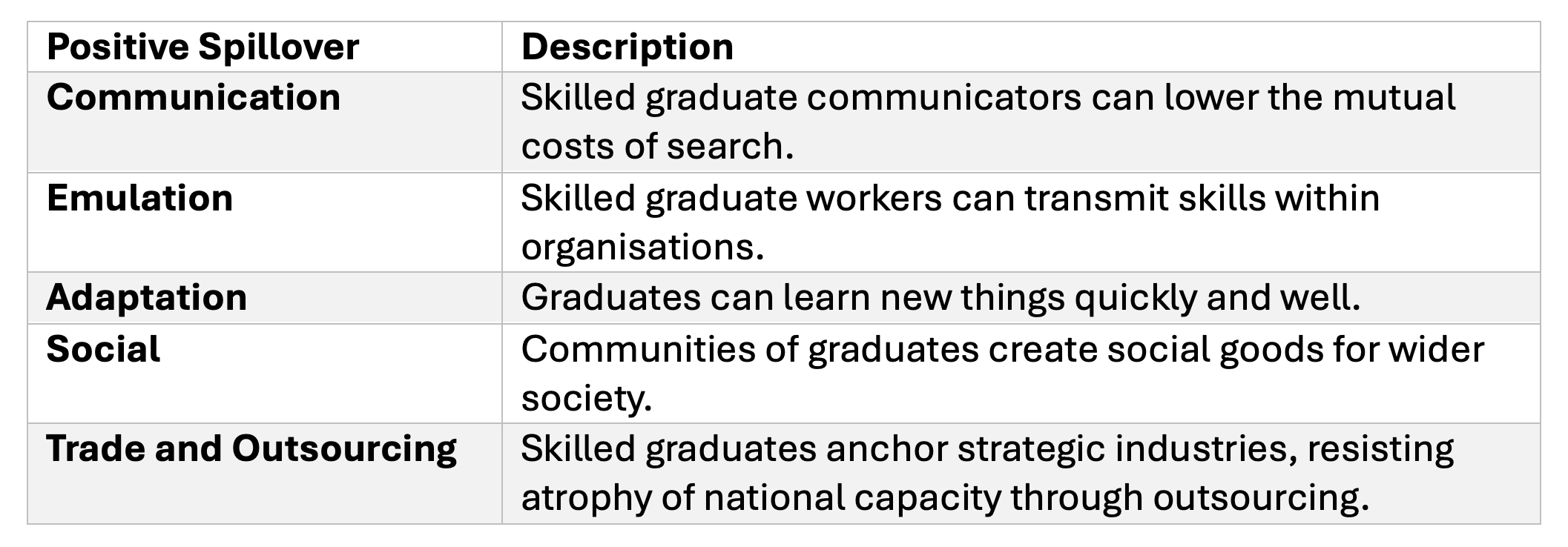
Table 2: a summary of some of Auerbach & Green’s spillover considerations.
They draw also on Sen’s and Nussbaum’s construction of a capability approach, in which education gives people individual freedom rather than individual earning power.[31] Centring freedom allows for a richer discussion of the insights associated with behavioural economics: how peoples’ preferences can change over time, how market certainty is poor over the timeframe of a career, and how personal characteristics such as identity or loss aversion influence decisions in employment contexts.
Their paper argues that recognising these benefits alters the policy calculus. Economic policy which risks high unemployment might be seen to run a higher cost, for example, if workplace learning relies heavily on the social transmission of skills and knowledge. The loss of learning would not be ‘priced in’ to an HCT-derived policy proposal, so HCT-derived outcomes might not be as desirable as calculated.
Long-term industrial policy is also hard to link to an education policy driven by short-term economic return to individuals. Drawing Marginson together with Auerbach & Green, the passage of time can be seen as an important weakness of HCT in this space when industries grow and shrink: an industry in decline may have strong earnings data, but weak earnings prospects.
HCT and Market Failure
Distinctions to explain certain market failures have been developed within HCT, too.[32] Becker maintained that primary education should be funded by the state, for example, because it is beneficial to a society for everyone to have basic education such as reading and arithmetic (a public good). This description would be weaker for education designed to boost personal competitiveness in the job market (a private good).
Dearing’s policy rationale explicitly reflects these accommodations within HCT. The rationale for £1,000 tuition fees was that some of the benefit of advanced education accrued to the individual, suggesting that policy makers in the 1990s saw public-private categories sitting on a continuum. Becker also argued that training can be general or specific, and training in narrow skills (e.g. working a particular kind of machine) should be borne by the employer while the cost of gaining general skills (e.g. time management) is to be borne by the worker.
Policy Positions
Having set up the choice of HCT and set out its key logics and critiques, I will now explore three policy positions from learned bodies. Each has put out a paper on the risks of closures for UK University Departments. By exploring how policy cases for subject-specific defences are being communicated, I sketch out how Human Capital arguments are presented and challenged. From this, my thesis statement emerges: professional bodies adopt the language of HCT to join the conversation, but challenge the prescriptions of HCT to argue for the survival of their disciplines.
The British Academy (BA)
The 2025 paper Cold Spots: Mapping inequality in SHAPE provision in UK higher education sets out a geographical account of course closures in Social Sciences Humanities and Arts for People and the Economy (SHAPE) subjects.[33] Cold spots are framed as an issue of access; the provision of languages subjects is shown to have halved since 2011-12.
The construction of the cold spot problem is framed in HCT-compatible terms. By “removing opportunity” (p6) to study in certain locations, cold spots mean that students – most of whom study within 90km of their home address – have less freedom as market actors. Embracing the student-as-consumer model, the BA makes the case for provision as a type of consumption to which people should have equal access. This argument is supported by considering how attending a local University is closely linked to socioeconomic indicators such as family wealth. But it is also tempered by descriptions of how consumer choice is restricted by the structure of the market:
Decisions about course closures at individual providers are often shaped by recruitment trends. But relying on student demand and market forces to shape what is taught and researched in our universities is a high-risk strategy – not least because students’ choices are often constrained by factors beyond their control. (p9)
This account of the decisions made by individuals and institutions points to a mechanism of student choice driving Universities’ capacities. This mechanism is linked directly to the market failure argument:
…a wholly market-driven approach to education risks creating perverse incentives, encouraging short-term decisions over strategic stewardship. It also overlooks the reality that no market operates in isolation from public discourse, political priorities, or media narratives about value. This has lasting consequences for universities’ ability to serve a public good. (p9)
The construction of demand is particularly interesting in this account, and the case of Languages is described in terms of a “vicious cycle” of falling teacher numbers leading to the withdrawal of school provision:
A decrease in student numbers on degree courses, for instance, may not be a sign of a market working well, but instead may well be a symptom of problems earlier in the education system where teacher recruitment and ‘overloaded’ curricula are recognised issues. (p36)
This line of argument provides a way to see the market outcome in Universities as a failure of state in schools. Schools are widely acknowledged as spaces where the Public Good argument holds great sway, meaning the appetite for state intervention is likely greater.
This lets the BA stitch together the microeconomics of closure with the market failure critique:
The closure of a course at one provider – particularly a course with low student numbers – may reflect a rational commercial decision, especially in the context of growing financial pressures. But hundreds of such decisions across dozens of providers quickly add up to a system-level failure. Without coordination or stewardship, the cumulative effect is a shrinking and increasingly uneven landscape of provision – one that may no longer meet the needs of students, local communities, or the wider economy. Market dynamics mean that courses such as Languages – despite the clear regional and national value of the skills they provide – are often among the first to be cut. (p37)
The key market failure arguments advanced are summarised in Table 3. Broadly, these are classical critiques of HCT tailored to the case of SHAPE subject today.
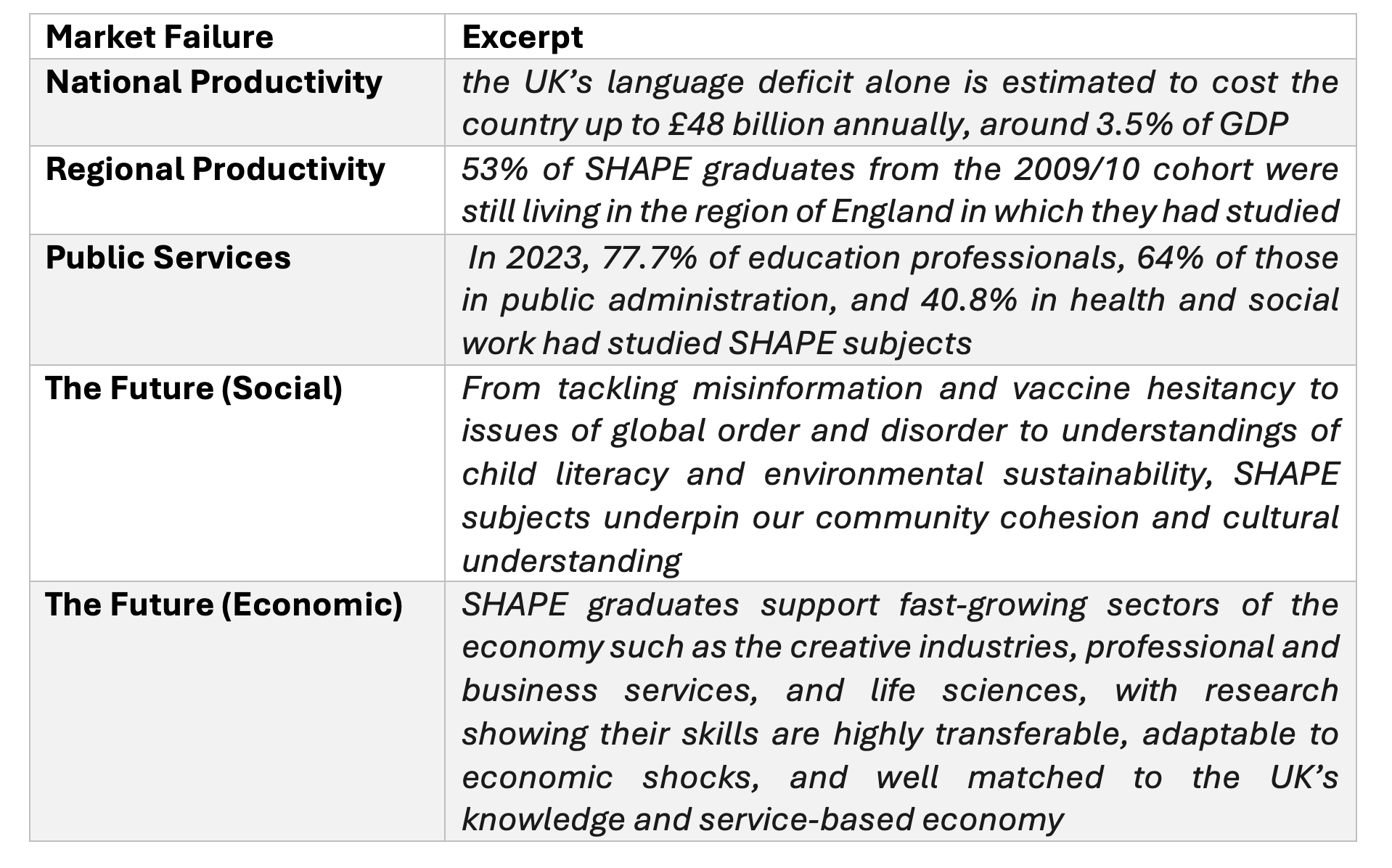
Table 3: excerpted market failure arguments from the British Academy Report (p37)
While the BA policy recommendations describe the need for a sustainable funding model for HE, the actions align with softening market pressures rather than funding to remove those pressures completely. For example, a request to clarify competition law to de-risk collaboration between providers aligns with cutting costs through regional partnerships. Similarly, monitoring closures at subject level is an information-sharing action aligned with softening the externalities emerging from uncoordinated closures. On the other hand, a recommendation to develop a premium for “at risk subjects” is a direct request for money.
BA: Summary and Analysis
Instead of developing a critical account of HCT, the paper develops a positive account of how SHAPE disciplines contribute to strengths in the current economy and can develop strengths in the future. The direct and sustained appeal to national productivity resonates strongly with the policy history of WP. “Softer” accounts of the human value of learning are heavily minimised, perhaps reflecting a judgement that such arguments would gain little traction with policy makers.
The presence of market failure arguments and the absence of realism arguments can be seen as a response to the central difficulty of University subject-specific lobbying. To be valuable to policy makers, professional bodies need to claim that they contribute to national productivity; HCT is the dominant model for constructing this case. But if HCT is the basis for the argument, then the negative market outcomes are prima facie evidence that the subject should be closed. Does government funding of Languages degrees grow the economy? If yes, why are the degrees so unpopular? If no, why should government fund them?
The Institute of Physics
The 2025 paper Physics Matters: Funding the Foundations of Growth is the core IOP response to threats faced by UK Physics Departments.[34] The central line of argument emphasises core state functions:
From quantum technologies to climate science, from energy security to healthcare innovation, the UK’s future depends on a strong, vibrant physics ecosystem. Physics underpins the technologies we use every day, the breakthroughs that drive our economy, and the knowledge we need to meet global challenges. It is essential to any positive vision for the UK and the world. (p5)
The focus is on Physics as a discipline, rather than physicists as individual economic agents:
From earth-based sensors and space-based satellite platforms to better understand our changing planet and universe, to using advanced materials such as ‘metamaterials’ to build lighter, stronger, more efficient structures, developing new cancer diagnostics and treatments to improve patient outcomes, or the ‘quantum 1.0’ fibre optics that bring better connections to millions of homes across the UK, physics has driven many of the world’s most impactful and successful innovations. (p16)
Discussing technological contributions takes the arguments in interesting directions, emphasising the risk of market failures relating to key functions of state:
Physics strengths are also vital to national security and technological sovereignty and are a source of competitive advantage. Our national capability in physics underpins many of the critical national infrastructures that are essential to the effective functioning and security of the nation such as electricity generation, telecommunications and defence, and the technologies that are likely to deliver strategic advantage in the future, such as quantum sensors, navigation and computing, next generation semiconductors, and sovereign access to space. (p17)
The decision to centre technologies helps the IOP construct a case for funding research, and research-related requests form most of their policy recommendations. Arguments for Human Capital embodied in Physics graduates are presented clearly as well (Table 4), though this case is often expressed through the needs of a sector rather than the productivity of an individual.
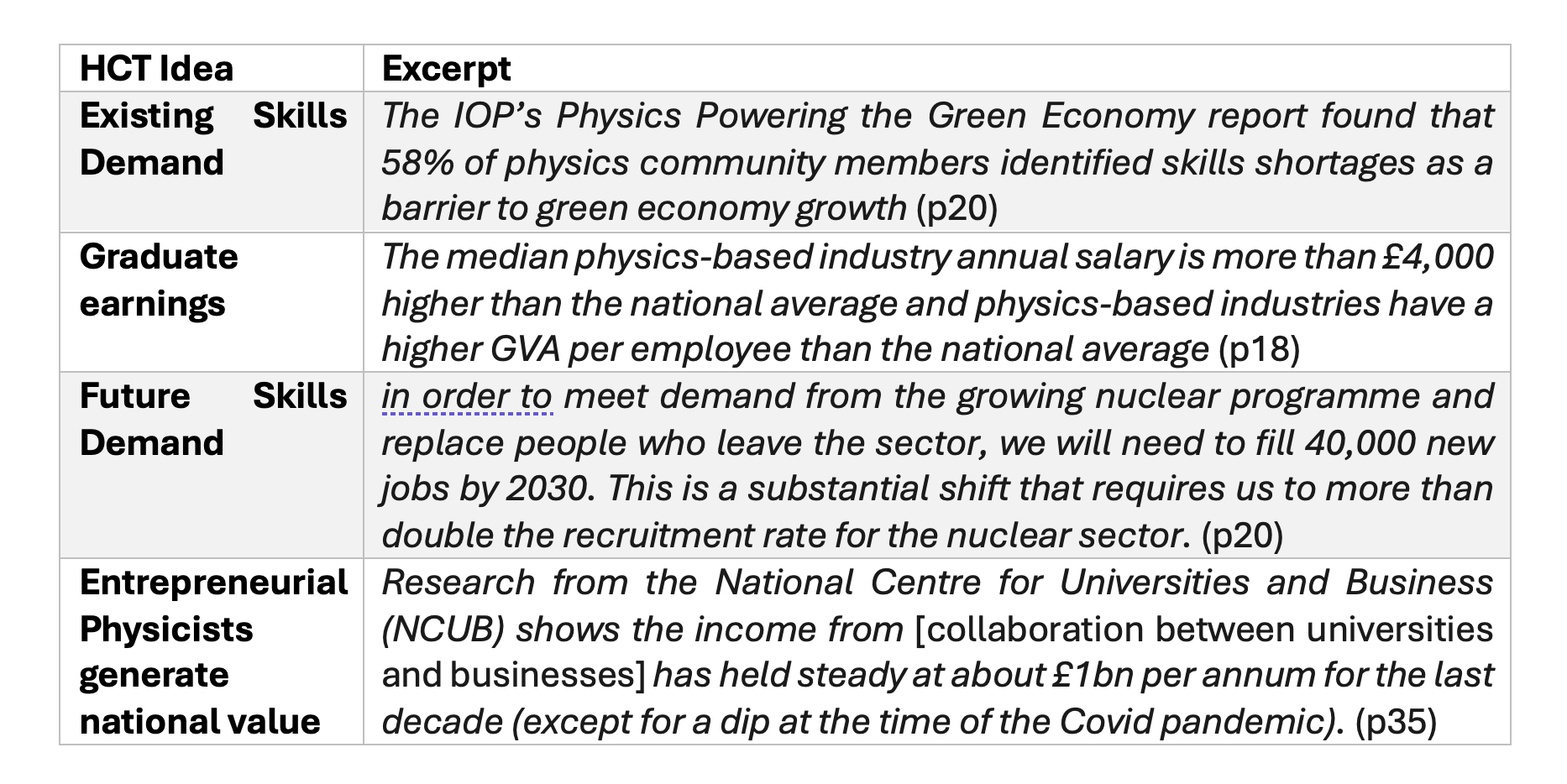
Table 4: Some of the HCT-related arguments in the IOP report.
Physics encounters the same challenge seen in the SHAPE analysis, though: if the subject is so valuable, why is it in danger?
Much of the research-aligned argumentation relates to grant income and the mechanics of cost recovery. Most University research is loss-making: despite the high quality of British Physics research, it costs money to deliver. Around 31% of research costs are shouldered by Universities rather than grants. Estates costs are presented as a particularly timely issue as many of the buildings developed in previous booms of University Physics are coming to the end of their lifetimes. These arguments push at market failure conceptions of the problem, with the transformational contributions of Physics under threat because of the short time horizons of research funding.
The teaching aligned arguments are tied to the research arguments by appeal to the people capable of doing Physics:
Universities’ physics departments have played an indispensable role in many of the technological developments that have driven the UK’s economic growth and shaped the society we live in. Their outputs – fundamental knowledge, novel insights and highly skilled, adaptable people – will also be needed to maintain the country’s advantages in critical technologies that will shape society and help us to live more prosperously in the decades to come (p17)
Broadly, Physics graduates are presented as people capable of delivering the technological advances developed in industrial and academic settings. Market failure is presented as the locally-rational action of course closure frustrating overall-rational response to global risks:
at a time when the World Economic Forum Global Risks Register sets out that four of the top sixteen short term risks, and all of the top four long term risks, are environmental in nature, and geophysics is required to address and mitigate them all. (p27)
The rhetoric is advanced through appeal to a description of what will happen without action (Table 5). The report ends on its central theme: emphasising the rich place for the discipline of Physics in the nation’s future: “we need more physics graduates and post-graduates.”
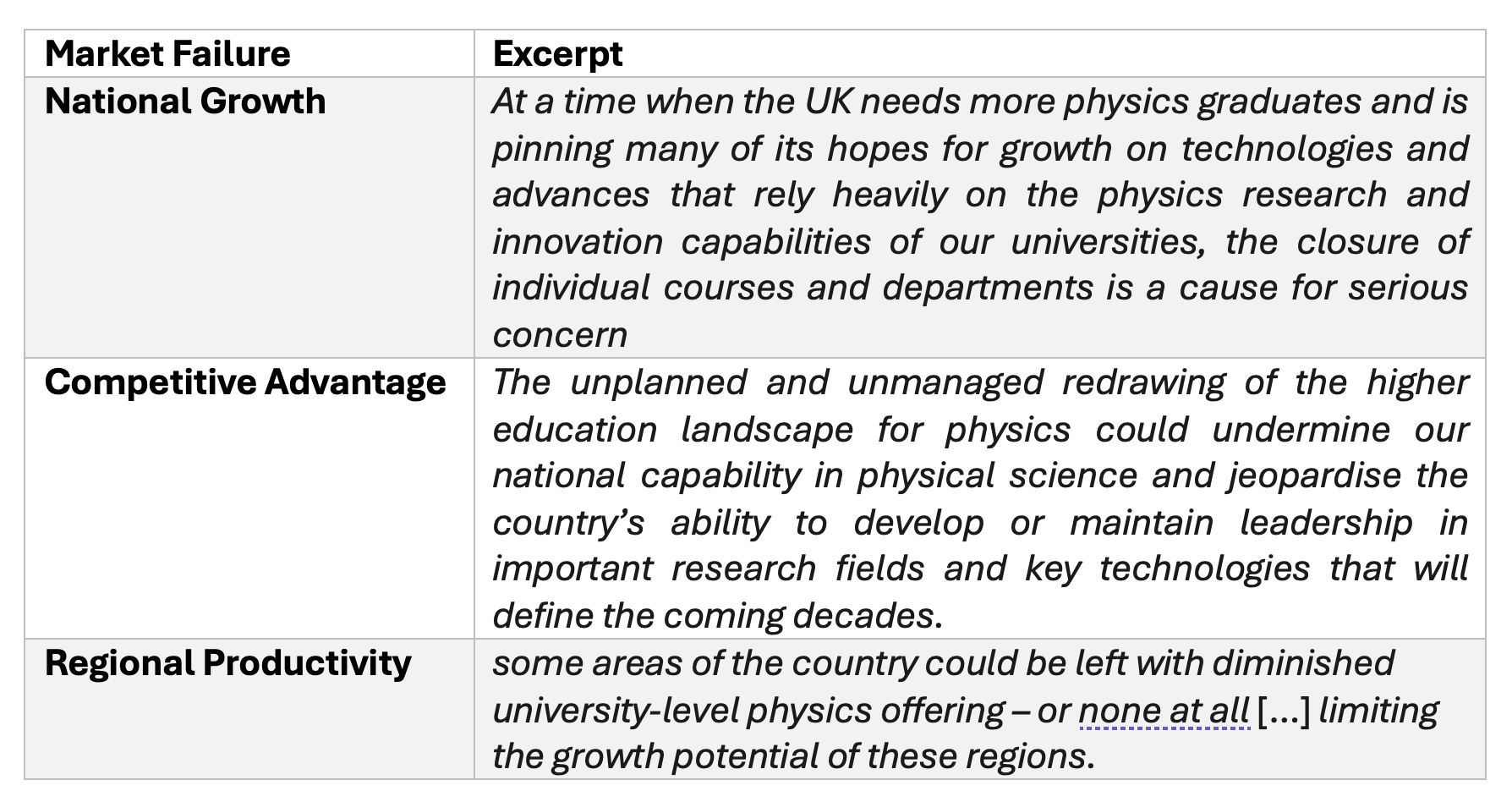
Table 5: market failure critiques in the IOP report are expressed as negative outcomes if the current trajectory continues. (p36)
IOP: Summary and Analysis
The market failure arguments mostly present the rewards of capital-P-Physics being accessible only through funding Departments better. Discussing the subject in this way allows specific arguments around competitive advantage and sovereign capabilities to be presented. At the same time, it goes some way towards explaining why a valuable subject is unpopular: Physics’ value is aligned not with student choices, but rather with research productivity.
The Royal Society of Chemistry
In its 2025 briefing Tackling the challenges facing chemistry in UK higher education, the RSC presents four policy recommendations with clear rationales.[35] It is a shorter document than those from the other bodies, spending less time articulating the background issues. The opening appeals very directly to market failure arguments:
Decision-making at institutional level may not always account for the local, regional or national skills and research capability needs when closing or merging courses or departments. […] We are extremely concerned about the risk of universities closing chemistry programmes and departments that provide substantial long-term benefits to local and national economies. (p1)
The rationales for recommendations return to this theme repeatedly, working through: the need to bolster Departmental finances (Recommendation 1); the need to consider national pattern created by of uncoordinated local closures (Recommendation 2); properly acknowledging the large contributions Chemistry makes to governmental Industrial Strategy (Recommendation 3); and – distinctively in these three professional body reports – the need to support students with the cost of living as they learn Chemistry (Recommendation 4).
Cost-of-living pressures are increasing the rates of student hardship, with 68% of students now working during term-time, whilst hours worked have also increased. As a high contact hour and practical subject, chemistry risks becoming less attractive to students balancing work and study. (p7)
The position of students is interesting to consider in terms of the critiques of HCT. The proposition of doing a high volume of academic work and also holding down a job makes the calculus of picking Chemistry less attractive: despite the high salary premium it attracts long-term, the immediate opportunity cost of studying Chemistry is high.
This expression of market failure is particularly interesting because it speaks to both the economic mechanisms of closure and the policy framing of Human Capital. Students are presented as market actors. Their rational decision to avoid Chemistry because it is difficult to earn while studying is set out as a reasonable response to the economic incentives presented by the necessary scope of a modern education in Chemistry. This outcome has direct consequences for the marginal economics of any University offering Chemistry degrees.
RSC: Summary and Analysis
The RSC policy briefing is a short, action-focused document which centres market failure arguments. While many of its arguments resonate with those of the BA and IOP, the brief discussion of student finances being constrictive is an important new argument. A rational consumer of education might decide to study a subject with fewer contact hours, even if there is a lower salary outcome.
Critical Conclusions
Across the three policy documents, there is a shared tension. By working within HCT to connect with policy makers, each discipline is forced to confront the HCT logic of closures being a direct outcome of a functioning market. After all, if Chemistry really is worth studying then it should flourish under a market model.
The arguments are therefore all about considering market failure from different perspectives: they hold that the subject does have value, but that the value is not properly acted upon (either by potential applicants, or by state funders). Resigned to a student-as-consumer model, each professional body describes the decline of its subjects as something which is undesirable because of what their discipline brings to society. The emphasis on market failure compares starkly with the absence of realism arguments. This is likely because market failure, unlike realism, does not challenge the legitimacy of narratives which have informed the reasoning of policy makers for decades.
Recommendations
A theoretical description of closures cannot save Chemistry Departments from closing, but by expressing the central problem as a relationship between microeconomics and HCT this thesis identifies where lobbying efforts might be focused.
Addressing microeconomic mechanisms
1. Policy arguments from professional bodies drawing on the old HEFCE “at-risk subject” premium intervention are hard to reconcile with the OfS-regulated market model. Developing demand-side policy proposals – like students paying a lower tuition fee or getting a cash grant for each year of study – offers one way of accessing Government funds within a market-driven policy landscape. This might be particularly important in Chemistry, which reports students struggling to reconcile part-time work alongside the high contact hours of study.
2. Collating practice on cost-cutting actions would help Chemistry Departments navigate current pressures and make marginal economic arguments more transparent. It would also reveal some of the market failures of the current trajectory: even for Departments which survive, provision is being eroded.
Addressing policy drivers
3. The current focus of PSRBs is on policy actions aligned with classical market failure diagnoses, but these are presented in a very case-specific way. A systematic analysis of market failure literature would provide novel, generalisable arguments which command the attention of policy makers. Crucially, such arguments gain credibility from sitting within an established tradition of HCT discourse, improving their chance of gaining traction with Government. The survival of Chemistry depends on finding vivid ways to explain to policy makers how the demand-led model systematically fails to recognise the long-term contributions of this discipline to national productivity.
[1] Michael Peel, Amy Borrett, Peter Foster. “Fall in UK university core science courses stokes fears for industrial strategy” Financial Times, January 2, 2026 https://www.ft.com/content/563f9820-d9a6-4e97-99e6-9e6c97919ca3?syn-25a6b1a6=1 Accessed 08 June 2026
[2] Independent. 2006. “Why Exeter University Defends the Closure of Its Chemistry Department” The Independent, June 7, 2006. https://www.independent.co.uk/news/education/higher/why-exeter-university-defends-the-closure-of-its-chemistry-department-481424.html. Accessed 08 June 2026
[3] Department of Education. 2019. “Measuring the Cost of Provision Using Transparent Approach to Costing Data.” https://assets.publishing.service.gov.uk/media/5f36518dd3bf7f1b18aaadf1/Measuring_the_cost_of_provision_using_transparent_approach_to_costing_data.pdf. Accessed 08 June2026
[4] Hemelt, Steven W., Kevin M. Stange, Fernando Furquim, Andrew Simon, and John E. Sawyer. 2020. “Why Is Math Cheaper Than English? Understanding Cost Differences in Higher Education.” Journal of Labor Economics 39 (2): 397–435. https://doi.org/10.1086/709535.
[5] The RSC accreditation criteria, for example, state (p11) “students must attend and complete a minimum of 300 timetabled laboratory hours (exclusive of project or independent investigative work)” “Degree Accreditation.” n.d. Royal Society of Chemistry. https://www.rsc.org/standards-and-recognition/accreditation/degree-accreditation. Accessed 08 June 2026
[6] Kettley, Nigel. 2007. “The Past, Present and Future of Widening Participation Research.” British Journal of Sociology of Education 28 (3): 333–47. https://doi.org/10.1080/01425690701252531.
[7] Two centuries later, the University of Liverpool alone has over 30,000 students.
[8] Statute Law Database. n.d. “Education Act 1944 (Repealed 1.11.1996).” https://www.legislation.gov.uk/ukpga/Geo6/7-8/31/contents. Accessed 08 June 2026
[9] Robbins, Lionel. Higher Education: Report of the Committee appointed by the Prime Minister under the chairmanship of Lord Robbins, 1961-63. Vol. 1, no. 5. HM Stationery Office, 1963. https://web.archive.org/web/20131030011903/http://www.educationengland.org.uk/documents/robbins/robbins1963.html. Accessed 08 June 2026
[10] Hillman, Nick. "The Robbins Report at 60: Essential facts for policymakers today." HEPI Policy Note (49) (2023). https://www.hepi.ac.uk/reports/the-robbins-report-at-60-essential-facts-for-policymakers-today/. Accessed 08 June 2026
[11] Williams, J. (1997) The discourse of access: the legitimation of selectivity, in: J. Williams (Ed.) Negotiating access to higher education: the discourse of selectivity and equity (Buckingham, Society for Research into Higher Education), 24–46
[12] Watts, Anthony Gordon. Diversity and choice in higher education. Routledge, 2018.
[13] Hoskins, Kate, and Sonia Ilie. "Widening participation to underrepresented and disadvantaged students: Social identity and the barriers to higher education access in England." In Bridges, pathways and transitions, pp. 87-102. Chandos Publishing, 2017.
[14] Lewis, J., P. Bolton, and S. Wilson. "Tuition fees in England: History, debates, and international comparisons." (2024). https://commonslibrary.parliament.uk/research-briefings/cbp-10155/ Accessed 08 June 2026
[15] Barr, Nicholas, and Iain Crawford. "The Dearing Report and the government's response: a critique." Political Quarterly 69, no. 1 (1998): 72-84. https://doi.org/10.1111/1467-923X.00138
[16] Browne, John, Independent Review of Higher Education Funding & Student Finance. 2010. “Securing a Sustainable Future for Higher Education: An Independent Review of Higher Education Funding & Student Finance.” https://assets.publishing.service.gov.uk/government/uploads/system/uploads/attachment_data/file/422565/bis-10-1208-securing-sustainable-higher-education-browne-report.pdf. Accessed 08 June 2026
[17] Ashwin, Paul. "The definition of educational quality in a quasi-marketised higher education system: stumbling towards a knowledge crisis." Oxford Review of Education 51, no. 6 (2025): 851-867. doi:10.1080/03054985.2025.2500943.
[18] Bolton, Paul. "Higher education student numbers." House of Commons Library, Briefing Paper 7857 (2026). https://commonslibrary.parliament.uk/research-briefings/cbp-7857/ accessed 22Jan2026
[19] Higher Education Statistics Agency “Table 45” https://www.hesa.ac.uk/data-and-analysis/students/table-45 accessed 08 June 2026
[20] Office for National Statistics “ Birth Summary Tables England and Wales”, https://www.ons.gov.uk/peoplepopulationandcommunity/birthsdeathsandmarriages/livebirths/bulletins/birthsummarytablesenglandandwales/2023 Accessed 08 June 2026
[21] Muradás-Taylor, Becky. "Undergraduate language programmes in England: A widening participation crisis." Arts and Humanities in Higher Education 22, no. 3 (2023): 322-342.
[22] Department for Education. 2025. “Longitudinal Education Outcomes (LEO): Collection.” GOV.UK. December 18, 2025. https://www.gov.uk/government/collections/longitudinal-education-outcomes-leo-collection. Accessed 08 June 2026
[23] “Release Home - LEO Graduate and Postgraduate Outcomes.” 2025. Explore Education Statistics - GOV.UK. June 26, 2025. https://explore-education-statistics.service.gov.uk/find-statistics/leo-graduate-and-postgraduate-outcomes/2022-23#dataBlock-7dd116c7-6b5a-433e-9753-0234b189da95-tables. Accessed 08 June 2026
[24] Edeji, Obinna Christian. "Neo-liberalism, human capital theory and the right to education: Economic interpretation of the purpose of education." Social Sciences & Humanities Open 9 (2024)
[25] Grugulis, Irena. "Human capital theory." In A guide to key theories for human resource management research, pp. 93-99. Edward Elgar Publishing, 2024.
[26] Marginson, Simon. 2019. “Limitations of Human Capital Theory*.” Studies in Higher Education 44 (2): 287–301. doi:10.1080/03075079.2017.1359823.
[27] Auerbach, Paul, and Francis Green. "Reformulating the critique of human capital theory." Journal of Economic Surveys39, no. 5 (2025): 1839-1851.
[28] Wolf, Alison. Does education matter?: Myths about education and economic growth. Penguin UK, 2002. See particularly Chapter 6 pp168-200 (The tyranny of numbers and the growth of the modern university)
[29] McGuinness, Seamus, Konstantinos Pouliakas, and Paul Redmond. "Skills mismatch: Concepts, measurement and policy approaches." Journal of Economic Surveys 32, no. 4 (2018): 985-1015.
[30] Vecchia, Michela, Catherine Robinson, Maja Savic, and Marina Romiti. Vertical and Horizontal Mismatch in the UK: Are Graduates' Skills a Good Fit for Their Jobs?. National Institute of Economic and Social Research, 2023.
[31] See, for example, Nussbaum, Martha C. "Capabilities as fundamental entitlements: Sen and social justice." In Capabilities equality, pp. 54-80. Routledge, 2007.
[32] Rees, Albert. "Human capital: a theoretical and empirical analysis with special reference to education." (1965): 958-960.
[33] British Academy, “Cold Spots: Mapping inequality in SHAPE provision in UK Higher Education”. https://www.thebritishacademy.ac.uk/policy-and-research/british-academy-shape-observatory/cold-spots-mapping-inequality-in-shape-provision/ Accessed 08 June 2026
[34] Institute of Physics “Physics Matters: Funding the Foundations of Growth”. https://www.iop.org/about/publications/physics-matters-funding-the-foundations-of-growth Accessed 08 June 2026
[35] Royal Society of Chemistry “Tackling the challenges facing chemistry in UK higher education”. https://www.rsc.org/policy-and-campaigning/policy-library/rsc-policy-briefing-2025-tackling-the-challenges-facing-chemistry-in-uk-higher-education accessed 08 June 2026