The Triple-Locked Tuition Fee
The pension “triple lock” was one of the flagship policies of the Cameron-Osborne governments. In the context of austere public spending after the financial crash, state pensions were linked to three metrics of inflation: CPI, % change in average earnings, and 2.5%. The highest of these three numbers is applied each year as an uplift to the pension.
There were important ways that state pensions certainly needed to be raised from the low level they had been sitting at, and this policy has steadily boosted the incomes of a financially-vulnerable group. The triple lock has been a good thing; pensioners are being given about £12bn/year more than they would have been on the pre triple-lock trajectory.
Taking a step or two back from the specific details, the triple lock can be seen as a statement of sustained support for pensioners from the government. I thought it would be interesting to see what a triple-locked tuition fee would look like to compare what sustained support for University teaching would have looked like.
The data
I have compiled the triple lock parameters from 2012 onwards (table of values at the foot of this blog), and applied them to the £9k tuition fee. For comparison, I have plotted the actual tuition fee as well.
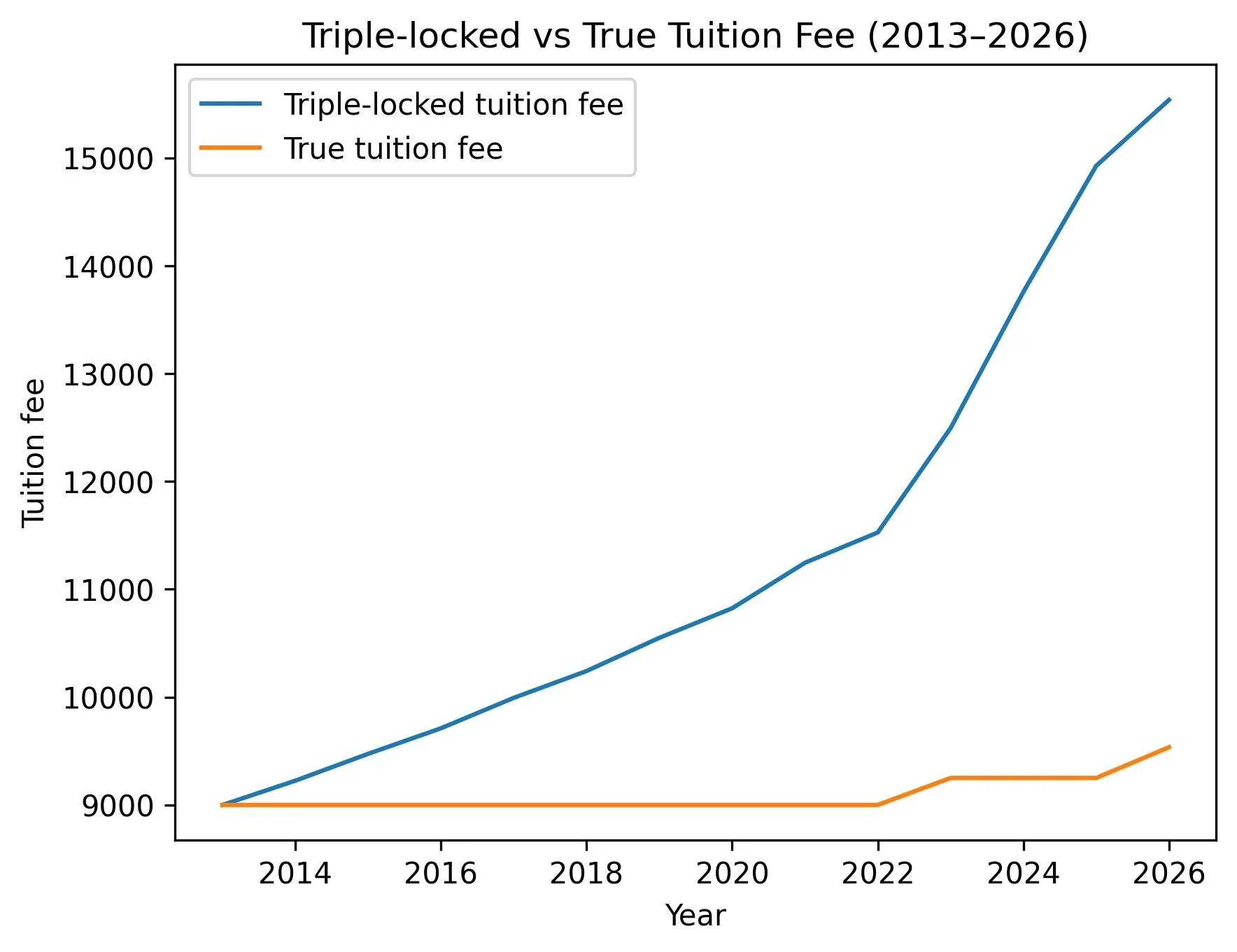
There are obviously important differences between government funding pensions and student tuition fees funding Universities, but the triple lock represents a set of numbers which could be described as a generous policy settlement over the last decade or so. Seeing the numbers plotted out, it seems fair to say that Universities have not enjoyed a generous settlement.
The government shifting the burden of funding of Universities from the state onto students makes this statement quite prickly. Students are paying a great deal of money, yet it is also true that Universities have experienced a massive decline in per-student funding.
Data sources and number
I took the % uplift values from a recent IFS blog, and scaled everything using this Excel sheet.